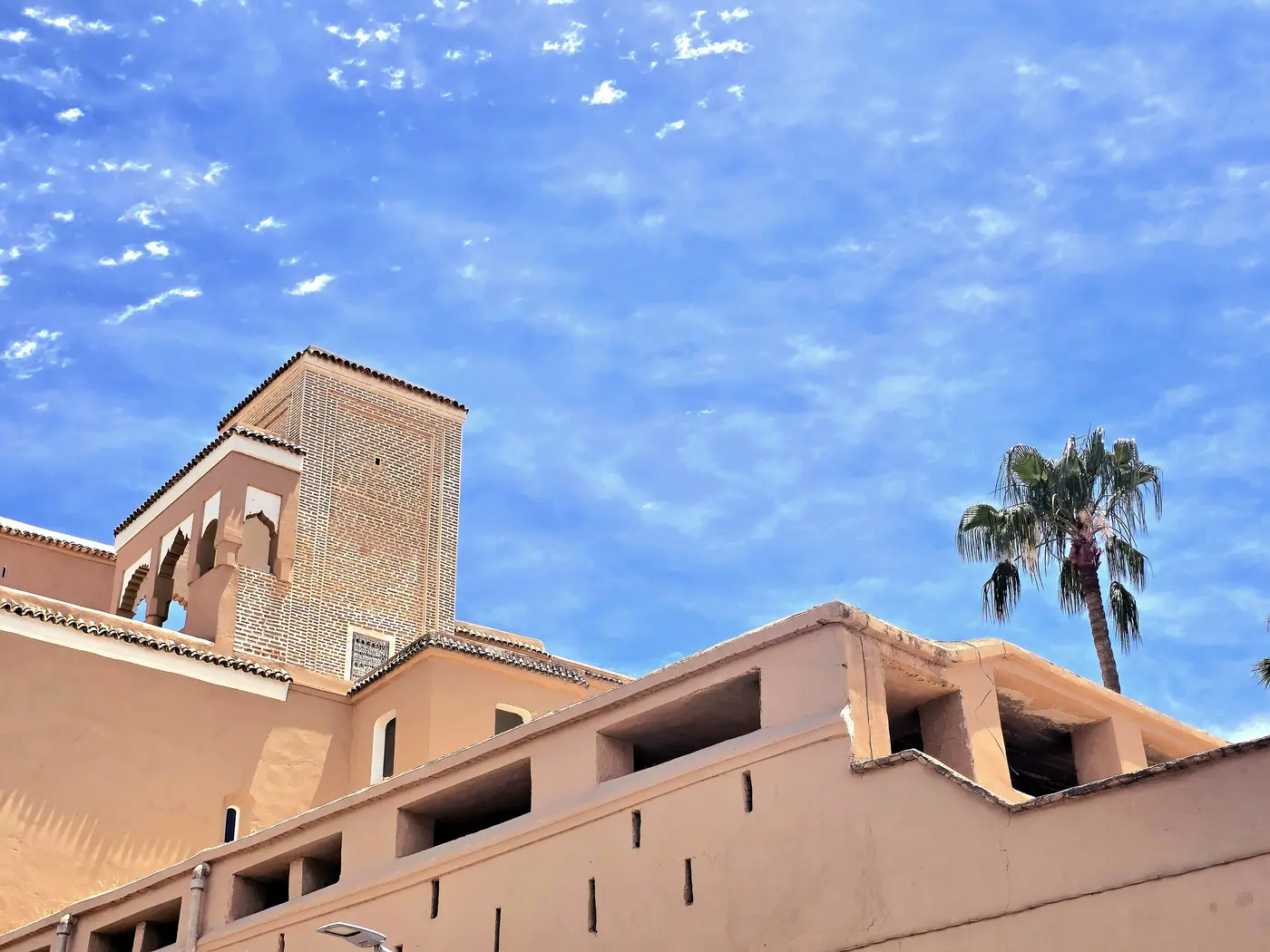
Some cities have existed for centuries in the shadow of Morocco's great tourist names. Taroudant is one of them. Nestled at the foot of the High Atlas, 80 kilometres from Agadir, this thousand-year-old city in the Souss-Massa region combines every hallmark of an exceptional tourist destination: a preserved medina, remarkably intact ramparts, an extraordinary natural hinterland, and an authenticity that Marrakech lost long ago. Yet its accommodation supply remains embryonic. For an attentive property owner or investor, that is precisely where the opportunity lies.
Taroudant, the city of a thousand nicknames
It is called "Little Marrakech", the "Granary of the Souss", or the "city of golden ramparts". Each nickname captures something true about Taroudant. Like Marrakech, it is dominated by reddish-brown pisé ramparts that stretch nearly 7.5 kilometres around the medina. Like the Souss valley, it lives to the rhythm of agriculture: argan trees, citrus groves, almond and olive trees wrap the city in a green cloak that visitors discover with surprise after crossing the arid plains.
But Taroudant has something extra that even Marrakech can no longer offer: tranquillity. Its medina lanes are not saturated with tourist shops and horse-drawn carriages. Residents are not weary of visitors — on the contrary, they welcome them with a warmth that genuinely surprises. The Monday and Thursday souks, which bring together merchants and farmers from across the province, are still real Berber markets, not theme parks.
A millennia-old history that captivates travellers
Taroudant's history is as long as Islam's presence in Morocco. The city is mentioned as early as the 11th century as an important commercial and agricultural hub in the Souss plain. It was here that the Almohads established one of their earliest bases before conquering the whole of Morocco in the 12th century. Under the Saadian dynasty, Taroudant experienced its golden age: in the 16th century it briefly served as Morocco's capital before that function was transferred to Marrakech. It was during this era that the great ramparts dominating the city today were built.
These ramparts — ranked among the best-preserved in Morocco — are the city's most striking heritage attraction. Built from pisé (a mixture of earth, lime and straw) using an ancestral Berber technique, they reach up to 8 metres in height in places. You can walk, cycle or ride a carriage all the way around — an experience travellers invariably describe as one of the highlights of their stay.
The medina itself is a labyrinth of narrow lanes, fondouks (former caravanserais) and traditional houses with interior courtyards — the riads. Unlike Marrakech or Fes, it has not yet undergone the intensive commercial transformation of recent decades. Its mosques, zaouïas (Sufi places of worship) and public baths (hammams) are still active, frequented by a local population that perpetuates age-old ways of life.
Tourism potential: figures that speak for themselves
The Souss-Massa region, of which Taroudant is one of the provincial capitals, welcomes several million tourists each year — the vast majority concentrated on the Agadir coast. Yet Agadir and Taroudant are only 80 kilometres apart. A growing number of travellers arriving in Agadir — by charter from Europe, or during a beach holiday — are looking to escape the coast for a night or two. Taroudant is their natural destination.
Demand is also fed by a wide variety of traveller profiles: hikers drawn to the Anti-Atlas peaks, Berber culture enthusiasts, photographers attracted by the Souss's distinctive light, honeymooning couples seeking an authentic riad away from the crowds, and Moroccan families spending their summer holidays in the relative coolness of the city. This diversity of clientele is a strength: it reduces dependence on a single season or type of traveller.
A virtually untapped market: At the time of writing, the number of properties listed on Airbnb in Taroudant remains far lower than in Marrakech, Agadir or even Essaouira. The first owners to position themselves correctly capture a disproportionate market share — and benefit from a lasting competitive advantage in the platforms' algorithms.
Natural assets: an exceptional hinterland
Taroudant is not just a city — it is a gateway to one of Morocco's richest hinterlands. An hour's drive away, the Anti-Atlas plateau offers landscapes of red schist and argan trees found nowhere else in the world. The gorges of Aït Mansour, the hilltop villages of Tioute and Igherm attract travellers seeking something authentic and undiscovered.
Taroudant's palm grove, stretching north of the city, is a verdant oasis bordered by the Souss river. It is a popular walking spot for local families, and an ideal setting for photography sessions and donkey rides that travel agencies are increasingly incorporating into their itineraries.
The Souss river itself deserves particular attention. The Oued Souss nature reserve is home to exceptional birdlife — bald ibis, flamingos, egrets — attracting ornithologists from around the world. This nature tourism, still niche, is growing rapidly and represents a high-spending clientele that typically seeks characterful accommodation.
Gastronomy and crafts: reasons to stay longer
The Souss cuisine is distinct from that of Marrakech or Fes. It draws on local produce of remarkable quality: argan oil (inscribed on UNESCO's intangible cultural heritage list), almonds, saffron from Taliouine (90 kilometres away), thyme and euphorbia honey. Taroudant's tagines, prepared with lamb or free-range chicken and garnished with local olives and preserved lemons, are considered among Morocco's best by those who have tasted them.
The local craftsmanship is worth seeking out. Taroudant's tanneries produce leather worked by traditional methods. Master craftsmen — the maâlem — working in wrought iron, thuya wood and pottery produce pieces that collectors specifically seek out. The medina's souks — the spice souk, the jewellers' souk, the kissaria — are treasures for fans of authentic shopping, far removed from the cheap imitations of larger tourist cities.
Seasonality in Taroudant: what a property owner needs to know
Unlike Marrakech, whose low season falls in summer, Taroudant benefits from a different seasonal dynamic. Its proximity to Agadir means that July and August see an influx of Moroccan families and Moroccans living abroad (MRE) seeking accommodation that is cheaper and more authentic than seafront hotels. The city's relative altitude (250 metres) delivers cool nights even in high summer — a genuine selling point.
The international tourist high season runs from October to April — the same as Marrakech. The mild climate (average temperatures between 18 and 24°C), quality of light for photography, and the many cultural events (moussems, festivals) in the region explain this appeal. From November to March, European travellers regularly arrive for short breaks of 2–3 nights, either as a complement to, or instead of, a night in Marrakech.
Key periods to maximise income
October – November: Return of European travellers. Ideal temperatures. Strong demand for "authentic Morocco" itineraries. This is when riads and guesthouses record their best occupancy rates.
December – January: Year-end holidays. Influx of Moroccan families. Nightly rates at their highest. Properties with outdoor space (terrace, patio) are particularly sought after.
March – April: Moroccan spring. Almond and cherry trees in blossom across the Anti-Atlas. Hikers and photographers flock to the region. Excellent period for properties close to the medina gates.
July – August: Mainly Moroccan and MRE clientele. Solid occupancy for well-positioned properties, especially those with air conditioning and a pool.
Why now is the right time to invest
The short-term rental market in Taroudant is still in its infancy. That is both a constraint and an extraordinary opportunity. A constraint, because travellers searching for Taroudant on Airbnb sometimes find few results and fall back on a hotel or traditional guesthouse. An opportunity, because the first owners to list well-presented, well-managed, well-referenced properties on the platforms will capture a market share their competitors will take years to recover.
The Airbnb algorithm favours new listings in under-saturated destinations. A property launched in Taroudant today will benefit for several months from a visibility boost that Marrakech owners can no longer hope for. Combined with a well-optimised listing, professional photos and responsive management, this early positioning is a competitive advantage that is hard to erode.
Demand is real and growing. Google searches for "riad Taroudant", "accommodation Taroudant" and "things to do in Taroudant" have grown significantly over the past three years, driven by travel pieces in international media rediscovering Morocco's secondary cities. Travel bloggers, influencers and journalists avoiding Marrakech's overtourism are turning to destinations like Taroudant — and their followers are following.
Key takeaway for investors: The combination of growing demand, still very limited supply, and an entry cost (purchase or rental price) significantly lower than Marrakech makes Taroudant one of Morocco's most attractive short-term rental opportunities in 2025.
What type of property works in Taroudant?
Travellers who come to Taroudant are primarily looking for an authentic experience. Modern generic apartments — the type that performs well in Casablanca or the modern districts of Marrakech — are less in demand. What attracts and retains visitors in Taroudant is character.
Riads and traditional houses with interior courtyards command the strongest demand. Even partially renovated, they offer an atmosphere that international travellers willingly pay a premium to find. The central patio, the fountain, the zellige tilework on the walls, the cedar beams overhead — these architectural features are powerful selling points that translate directly into the per-night rate you can charge.
Houses with a terrace overlooking the ramparts or the Atlas mountains are particularly sought after. The terrace is where travellers take breakfast at sunrise, photograph the storks nesting on the wall towers, or dine under the stars in a silence that modern city life no longer offers. It is a strong differentiation argument.
Small family houses in the medina — 2 to 3 bedrooms, living room, kitchen, patio — are ideal for families or small groups of friends travelling together. They allow for higher per-night rates than a standard apartment while remaining accessible compared to a hotel riad. This segment — halfway between private and hotel — is precisely where Airbnb creates the most value for owners.
How Logelux can support you in Taroudant
Logelux manages properties across several Moroccan cities and supports owners at every step: listing creation and optimisation, professional photography, reservation and guest management, cleaning and check-in. Our approach is built on deep knowledge of local markets and dynamic pricing tools that allow us to adjust your property's rate night by night based on real demand.
For Taroudant property owners, we offer tailored support adapted to the specificities of a developing market. Whether you already own a property and want to rent it out, or you are considering an investment in the city, we can help you estimate your property's potential and develop an appropriate go-to-market strategy.
Managing a property remotely in a city like Taroudant is a challenge we meet through trusted local partners — cleaning teams, caretakers, tradespeople — able to respond quickly and guarantee the quality of the guest experience. If you own a property in Taroudant or are considering acquiring one, contact us for a free estimate and a no-commitment discussion about your options.
To go further, discover our analysis of the Moroccan short-term rental market in 2025 and our advice on how to optimise your Airbnb listing to maximise bookings from day one.
Taroudant in key facts — for travellers and property owners
- Population: approximately 80,000 inhabitants — a human-scale city, easy to explore on foot or by bike.
- Distance from Agadir: 80 km, about 1h15 by car — ideal for a day trip or a combined stay.
- Nearest airport: Agadir Al Massira, served by dozens of direct flights from Europe.
- Languages spoken: Tachelhit (the Souss Berber dialect), Moroccan Arabic, French. English is not widely spoken outside tourist establishments.
- Climate: Sunny almost year-round. Hot summers (up to 40°C during the day) but cool nights. Mild, pleasant winters.
- Not to be missed: The ramparts at sunset, the Thursday Berber souk, the tanneries, the palm grove, and a trip to Tioute and its argan trees.
Do you own a property in Taroudant — or are you looking to acquire one for short-term rental? Request a free estimate from our team. We reply within 24h with a personalised projection of your potential income and advice tailored to the local market.
